Source Customized Food Grade Mylar Bag with Valve for Coffee, Snacks, and Nuts
Compare 30 listings for customized food grade mylar bag with valve options featuring moisture-proof barriers and heat seal capabilities. Buyers can evaluate materials like PET/Al/PE, sizes, and certifications such as BRC and ISO for coffee powder, snack, and nut packaging needs.
Key considerations
Products List






Comprehensive Sourcing Guide
Strategic Sourcing Guide for Customized Food Grade Mylar Bags with Valve
Navigating the global market for customized food-grade packaging requires a meticulous approach, particularly when sourcing specialized items like mylar bags equipped with degassing valves. These components are critical for preserving the freshness, aroma, and structural integrity of sensitive products such as coffee beans, nuts, and snacks. The procurement process involves balancing technical specifications, regulatory compliance, and supply chain reliability. Buyers must rely on verified data points rather than marketing generalizations to ensure that the selected packaging solutions meet rigorous quality standards and operational needs.
Technical Specifications and Material Composition
The foundation of a successful procurement strategy lies in understanding the precise technical attributes of the packaging. The core material for high-performance food bags often involves a multi-layer composite structure. Based on observed industry data, a common and robust configuration includes a combination of Polyester (PET), Aluminum (Al), and Polyethylene (PE). This specific layering provides an excellent barrier against oxygen, moisture, and light, which are the primary enemies of food quality. The aluminum layer, in particular, is essential for creating a light-proof and airtight seal, ensuring that volatile compounds in products like coffee or spices do not degrade over time.
Beyond the raw materials, the physical dimensions and structural design are paramount. The industry standard for these bags often accommodates specific size requirements, with observed specifications ranging from standard dimensions like 25x13cm with a 3.5x2cm valve opening to fully customized sizes. The thickness of the film is another critical variable, typically observed in the range of 80 to 200 microns. This thickness directly correlates to the bag's durability and its ability to withstand the rigors of shipping and storage. Buyers should verify that the selected thickness aligns with the weight of the product; for instance, heavier items like nuts may require the upper end of this range to prevent punctures.
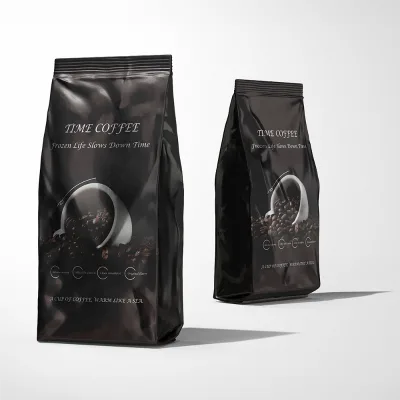
The structural form of the bag also dictates its functionality. The "Square Bottom Bag" or "Stand up Flat Bottom Bag" (Doypack) design is prevalent in the market. This shape allows the bag to stand upright on retail shelves, maximizing visibility and shelf presence. The inclusion of a one-way degassing valve is a non-negotiable feature for products that release carbon dioxide, such as roasted coffee. This valve allows gas to escape without letting oxygen in, a mechanism that is vital for maintaining product quality. The sealing method is typically heat seal, which ensures a hermetic closure that is resistant to leakage.
Compliance, Certification, and Regulatory Standards
In the realm of food packaging, compliance is not merely a formality but a prerequisite for market access. Buyers must verify that suppliers possess valid certifications that attest to the safety and quality of their manufacturing processes. Common certifications observed in the sector include BRC (British Retail Consortium), SGS, and ISO standards. These certifications indicate that the supplier adheres to international quality management systems and food safety protocols.
When evaluating a supplier, the buyer should request proof of these certifications rather than accepting them as implied. The specific standard for the product itself may vary, but observed data suggests standards related to dimensions (e.g., 2513cm+3.52cm) and material safety. It is crucial to ensure that the raw materials used, such as the PET/Al/PE composite, are food-grade and free from harmful contaminants. The packaging must be non-toxic and safe for direct contact with food products.
Furthermore, the "Food Packaging" application requires adherence to specific regional regulations. While the observed data points to certifications like BRC and SGS, buyers should confirm that these certifications cover the specific food categories they intend to package. For example, packaging for dry goods like nuts may have different regulatory requirements compared to moist or oily products. The transparency of the material is also a factor; many food-grade mylar bags are non-transparent to protect the contents from UV light, which can accelerate oxidation.
Cost Drivers and Economic Factors
Understanding the cost structure of customized food-grade bags is essential for budgeting and negotiation. The price of these bags is influenced by several variables, including material costs, customization complexity, and order volume. The raw material market for PET, aluminum, and PE fluctuates, directly impacting the unit price. Additionally, the inclusion of specialized features, such as degassing valves, adds to the manufacturing cost.
Order volume is a significant driver of cost efficiency. Observed data indicates a Minimum Order Quantity (MOQ) range that can vary widely, from 100 units to 50,000 units, with specific instances showing MOQs of 20,000 or 30,000 pieces. Higher volumes typically result in a lower unit cost due to economies of scale in production and material purchasing. However, buyers must balance the need for lower unit costs with their inventory management capabilities.
Customization is another major cost factor. While the base product may be standard, features like custom logos, specific colors (CMYK or custom), and unique designs require additional setup and printing processes. The "Customized" attribute is a standard offering, but the extent of customization will dictate the final price. Buyers should also consider the cost of samples. While samples are often provided for free, the freight cost is typically borne by the buyer, which should be factored into the initial testing budget.
Typical Applications and Product Suitability
The versatility of customized mylar bags with valves makes them suitable for a wide array of applications. The primary use cases observed include the packaging of snacks, nuts, and coffee products. The "Snack and Nut" application highlights the bag's ability to protect dry, crunchy items from moisture and crushing. Similarly, the "Coffee Powder" and "Coffee Bean" applications leverage the degassing valve to manage the release of carbon dioxide, a critical requirement for roasted coffee.
Beyond food, these bags are also utilized in stationery and gift packaging, demonstrating their adaptability. The "Stationery Packaging" and "Gift Packaging" applications suggest that the aesthetic capabilities of the bag, such as custom printing and design, are highly valued. The "Upright Bag" and "Flat Bottom Coffee Bag" styles are particularly effective for retail environments where shelf presence is crucial.
The following table summarizes the typical applications and corresponding bag features based on observed data:
| Application Category | Key Product Examples | Required Bag Features |
|---|---|---|
| Food Packaging | Coffee Beans, Coffee Powder | Degassing Valve, Moisture Proof, Aluminum Layer |
| Snack & Nut | Mixed Nuts, Chips | Shock Resistance, High Thickness (80-200mic) |
| Gift & Stationery | Small Gifts, Stationery Items | Custom Design, CMYK Printing, Aesthetic Finish |
| General Storage | Various Dry Goods | Recyclable, Waterproof, Stand-up Design |
Supplier Evaluation and Selection Criteria
Selecting the right supplier is a critical step that goes beyond price comparison. Buyers should evaluate suppliers based on their manufacturing capabilities, customization options, and logistical reliability. The "Customization" attribute is widely available, but the depth of this capability varies. A robust supplier should offer options for custom sizes, colors, logos, and designs, allowing for brand differentiation.
The production capacity is another vital metric. Observed data indicates a capacity of 60g per bag with customization options, but the overall factory output capacity determines the supplier's ability to meet large-scale demands. Buyers should inquire about the supplier's ability to handle their specific order volume, especially if they are looking to scale up production.
Quality control processes are also essential. Suppliers should have established protocols for ensuring that every bag meets the specified thickness, sealing integrity, and valve functionality. The "Composite Packaging Bag" process requires precision to ensure that the layers are bonded correctly. Additionally, the supplier's location, often cited as Guangdong or Jiangxi in China, can influence lead times and shipping costs. Buyers should verify the supplier's location to estimate logistics timelines accurately.
Quality Control and Inspection Protocols
Implementing a rigorous quality control (QC) protocol is necessary to mitigate risks associated with packaging failures. The primary attributes to inspect include the sealing strength, the functionality of the valve, and the overall barrier properties. The "Moisture Proof" and "Waterproof Performance" claims must be verified through testing, especially for products sensitive to humidity.
Inspection should cover the physical dimensions to ensure they match the ordered specifications, such as the 25*13cm standard or custom dimensions. The thickness of the material should be measured to confirm it falls within the 80-200mic range. Visual inspections should check for printing defects, color consistency, and the integrity of the heat seal.
For large orders, a third-party inspection service can provide an objective assessment of the product quality before shipment. This is particularly important when dealing with international suppliers where direct oversight may be limited. The "Shock Resistance" feature should be tested to ensure the bag can withstand handling and shipping stresses without rupturing.
Long-Term Procurement and Sustainability Considerations
Sourcing food-grade packaging is not a one-time transaction but a long-term partnership. Buyers should consider the sustainability aspects of the packaging. The "Recyclable" feature is a growing demand in the market, and suppliers should be able to provide information on the recyclability of their materials. While the composite nature of PET/Al/PE bags can present recycling challenges, some suppliers may offer solutions or alternatives that align with environmental goals.
Supply chain resilience is another long-term consideration. Buyers should assess the supplier's ability to maintain consistent quality and delivery schedules over time. The "Carton/Pallet" packing method observed in the data suggests a standardized approach to shipping, which can help in logistics planning. However, buyers should confirm the specific packing details, such as the use of shrink film or dividers, to ensure product safety during transit.
Finally, the flexibility of the supplier to adapt to changing market needs is crucial. The ability to offer "OEM/ODM" services allows buyers to tailor the packaging to their evolving brand requirements. As consumer preferences shift towards more sustainable or innovative packaging, the supplier's capacity to innovate and adapt will be a key differentiator. Buyers should maintain open communication with their suppliers to stay informed about new materials, technologies, and regulatory changes that may impact their procurement strategy.
FAQs
What materials are used for customized food grade mylar bag with valve?
The bags typically use a composite structure of PET, Aluminum, and PE layers. This combination provides essential barriers against oxygen, moisture, and light to preserve product freshness.
Can I get free samples for customized food grade mylar bag with valve?
Free samples are available, but the buyer must cover the freight cost. This allows you to verify quality before committing to a larger order volume.
Which certifications do suppliers offer for customized food grade mylar bag with valve?
Suppliers commonly hold BRC, SGS, and ISO certifications to ensure food safety compliance. These standards verify that the manufacturing processes meet international quality and safety protocols.
How is the minimum order quantity determined for customized food grade mylar bag with valve?
MOQs vary by supplier but typically range from 100 to 50,000 pieces. Specific listings show requirements of 20,000 or 30,000 pieces depending on the customization level.
What are the standard dimensions for customized food grade mylar bag with valve?
Standard sizes include 25 by 13 centimeters with a 3.5 by 2 centimeter valve opening. Custom dimensions are also available to fit specific product requirements.
Which sealing method is used for customized food grade mylar bag with valve?
Heat sealing is the standard method used to ensure a hermetic closure. This process prevents leakage and maintains the moisture-proof integrity of the packaging.